

By Joseph Reichert
- © 2025 Joseph Reichert, Inc.
- First Publication: June 5, 2025
- Revisions: January 17 2026; June 15, 2026; July 25, 2026; August 18, 2026
NOTICE OF COPYRIGHT AND LIMITED LICENSE TO REPRODUCE AND DISTRIBUTE THIS DOCUMENT
Joseph Reichert, Inc., a New Mexico corporation, owns the copyright in this document, and is the only person lawfully allowed to publish it. Joseph Reichert, Inc., makes a special exception to its exclusive rights in this work, and all persons are hereby granted a license to reproduce and distribute it, subject to the following conditions: (1) Under no circumstances shall any charge be exacted for any copy of this document, including charges for the costs of reproduction or distribution of the same; (2) any and all copies distributed pursuant to the terms of this limited license must be given in complete and unmodified form, including the full text of this Notice, which must be conspicuously displayed on the first page. Any use of this document which varies from the terms of this license is a violation of the copyright owned by Joseph Reichert, Inc., and infringement will be vigorously pursued under the terms of the United States Copyright Act.
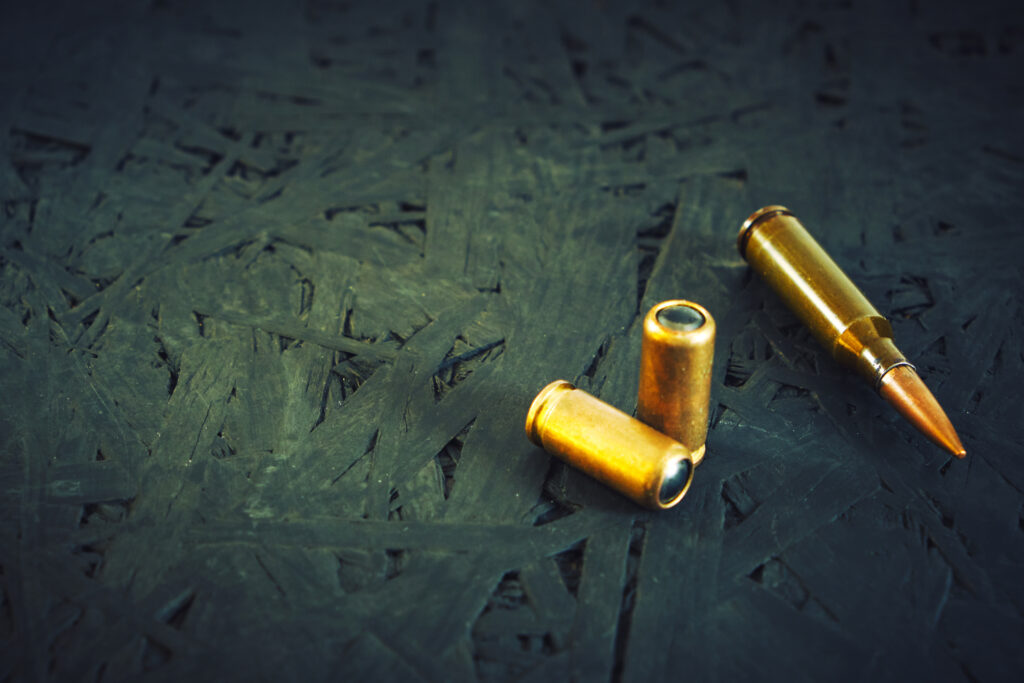
Conventional reloading is a useful skill, but it cannot provide self sufficiency in ammunition.
INTRODUCTION
Securing a supply of ammunition is a matter of current concern. Most shooters have experienced some form of ammunition shortage in recent years. In some cases, this shortage was attributable to a lack of reloading tools and materials. In other cases it has been due to a dearth of surplus military ammunition which had once been plentiful. The circumstances that qualify as an ammunition shortage are too numerous for an exhaustive list. However, we all know that we cannot count on an unlimited commercially manufactured supply.
Can we keep ourselves supplied with ammunition? What skills are required to develop self sufficiency in ammunition? We should learn such skills, because by making ammunition you are keeping yourself supplied!
THE FOCUS OF THIS ARTICLE
In this article, I will establish the basic abilities which one must possess to achieve self sufficiency in ammunition. I will explain the skills one must master to keep a constant supply of ammunition on hand. Full self sufficiency dictates that this be done without assistance from commercial manufacturers. One who has achieved this level of ability may rightly claim to be “self sufficient in ammunition.”
A knowledgeable craftsman never runs out of ammunition.
Individual Self Sufficiency
There is one aspect of self-sufficiency, which we might call individual self-sufficiency. However, from the standpoint of efficiency, economy, and product quality, this may not be the best approach. It may not be beneficial for one person alone to attempt to fabricate all ammunition components.
Collective Self Sufficiency
In almost all cases, an aspiring ammunition maker will be able to assemble a community of interested collaborators. Each participant can cultivate a specialty, so the different components they create converge to produce a completed product. This arrangement I would describe as collective self sufficiency. Every member of such a group enjoys self sufficiency in ammunition.
Therefore, I am not exhorting my readers to pursue every single technical process delineated in this article. I am attempting to provide a list of all the skills and components that go into manufacturing a cartridge. I anticipate that craftspeople will master the specialties which catch their individual interests.
By making ammunition you are keeping yourself supplied. With this understanding, let us try to develop an overview of all the skills required to keep our guns shooting.
PROPELLANTS
Before there was anything else, there were propellants, usually in the form of powdered or granulated solids. A functional propellant is the cornerstone of self sufficiency in ammunition. Therefore, if you have any hope of being self sufficient in ammunition, you must devise a way to make your own propellants.
Scholars writing about firearms development maintain that alchemists produced mixtures similar to black gunpowder long before artificers invented guns. These products were characterized by the inclusion of oxidizing agents and a fuel in the recipe. They were capable of combustion in closed containers without access to air. Most authors hold the opinion that these mixtures were first employed as incendiaries. Only later did creative minds realize that they were capable of pushing projectiles out of a tube with great force.
It would not be amiss to say that gunpowder invented the gun.
Right thinking men were appalled. Illiterate agrarians could cut down the flower of chivalry without engaging in personal combat. Every tragedy requires a villain. Therefore, Berthold Schwarz (probably fictitious) got the credit for inventing gunpowder.
We are now the alchemists. A knowledgeable craftsman never runs out of ammunition.
Black Powder, A Path To Self Sufficiency In Ammunition
The Old Article
After a period of development spanning several centuries, the substance we know as black powder assumed its present form. It is “the old article”, the original ballistic propellant. If you can produce only functional black powder, you are on the way to keeping yourself supplied with ammunition. By the middle of the 18th century, the formulas for black powder had converged towards a fixed formula. The ratios of potassium nitrate, charcoal and sulfur were settled. Since that time, the accepted formula has been 75 parts of nitrate, 15 parts of charcoal, and 10 parts of sulfur. Some manufacturers change these proportions slightly, but they always hover around these ratios.
More Than A Simple Recipe
The process for making quality black powder is dependent upon far more than this simple recipe. A cursory inquiry into black powder manufacture will reveal that the quality of the ingredients is of great importance. The origin of the charcoal is the most significant. To obtain a satisfactory result, manufacturers make the charcoal in a closed retort. Not every species of tree will produce good charcoal. Black powder charcoal must come from the wood of a suitable species of tree. Not all trees yield a wood suitable for the purpose.
Expert charcoal makers roast it for a specific period of time at a determined temperature, in a sealed retort. Thereafter, thorough incorporation of the ingredients is of consummate importance. The powder is compressed to increase its density, then broken into consistent grains. These measures are used to make black powder which is suitable for firearms.
Know your trees and understand the requirements of the charring process. Much basic knowledge can be found in pyrotechnic literature.
Remember that a knowledgeable craftsman never runs out of ammunition.
The Simplest Level Of Self Sufficiency In Ammunition
Once you have black powder, you have the main thing needed to feed a flintlock weapon. You have arrived at the late 18th century in your ability to manufacture ammunition. You are “self sufficient in ammunition” if you can also chip flint and cast bullets. In fact, these latter activities could be handed over to a collaborator. A correctly formed flint, and fine powder dust placed in the pan, comprise the “primer” of your load. If you are content to stay at this stage of weapons development, you need not worry about casings or other modern conveniences.
How Good Must Our Powder Be? Aspire To Be Self Sufficient In Ammunition By Making The Best.
I have mentioned black powder which will meet the demands of modern shooters. However, this is probably more than is necessary to render a flintlock weapon useful. When flintlocks were the current technology, it is doubtful that many powder makers sold a product equal to the modern products. Perusing descriptions of the powder mills established during the American Revolution, I doubt that their powder was uniform in quality. It may not have been up to present day standards, but it sufficed to resyrain the power of Great Britain.
But if you decide to manufacture black powder, you have no reason to make anything except the very best. A powder of optimum quality will doubtless give excellent results in both flintlocks and cartridge guns. If you aspire to keep yourself supplied with ammunition, make your ammunition the best.
A knowledgeable craftsman never runs out of ammunition. If you aspire to be such a craftsman, strive to create the best product.
Remember: by making ammunition you are keeping yourself supplied.
Learning To Make Black Powder
Little recent literature is available concerning the manufacture of black powder. The authors of the few books on the subject seem to have ignored the shooting community. I believe that the researcher will find his or her greatest success by turning to publications written for professional pyrotechnists. I intend to cover the pyrotechnic literature in detail in future articles. In these, I will describe specific techniques necessary to make high quality black powder. For the curious, I have included several works on black powder manufacture in our free Bibliography.
By making ammunition you are keeping yourself supplied. However, the information necessary to make some components may be hard to locate. A large part of your success will be founded on your capacity for focused research.
Can We Be Self Sufficient In Ammunition By Manufacturing Smokeless Powder?
Nitroglycerine: Don’t Go There
The manufacture of functional smokeless powders is a different matter. It is certainly no safer than making black powder. It is distinctly more dangerous if our smokeless powder includes nitroglycerin as one of its ingredients. Personally, I have no interest in attempting to make even small batches of nitroglycerin. Many highly qualified experts died when they undertook this task. My knowledge is not equal to that of these “martyrs to science”.
When I exhort my readers to practice self sufficiency in ammunition, I intend they do it safely. Do not keep yourself supplied at the hazard of your life.
Nitrocellulose Dangerous
Chemists have developed several successful powders based upon nitrocellulose alone. This is a process which an experimenter can conduct by placing well washed cotton in a chilled nitrating solution. Nitrocellulose is soluble in acetone, ether, certain alcohols, and mixtures of these solvents. When in this gelatinous state, experimenters can mold it as they wish. I have observed such procedures, and the participants advised me that this is not a particularly perilous process. Their representations were not convincing. A very spectacular mishap occurred during one such demonstration.
When you embark on the journey of self sufficiency in ammunition, do not believe everything that half-informed “experts” tell you. This caution is especially true when applied to your safety.
Perhaps Too Dangerous?
In one instance, amateur chemists invited me to watch the preparation of nitrocellulose. Fortunately, they conducted their show outdoors, on an open table. As they explained their project, the whole mass in the nitrating vessel began to bubble. It let out long plumes of reddish gas. Then it suddenly projected a jet of fiercely acidic material over the whole area. I left for a location about 25 yards away before the eruption occurred. Later, we observed that acid covered the table, most of the laboratory equipment, and many record books.
Another important consideration is that it is difficult to control the percentage of cellulose that ends up nitrated. The percentage of nitration will make a tremendous difference in the potency of the resulting propellant. Firing a cartridge loaded with a propellant of unknown strength is one of the most dangerous operations one can undertake. It is another adventure that I am unwilling to try.
Ammonpulver
We can consider at least one other propellant. I refer to the mixture which German speakers call “Ammonpulver”. In its most basic form, this is a combination of 80% ammonium nitrate and 20% charcoal, as measured by weight. A variant of this product, called Amidpulver, replaces a portion of the ammonium nitrate with potassium nitrate. I have made no tests comparing these two substances, but I would guess that Amidpulver is easier to ignite.
It Has Seen Military Use, But Problems Arose
In the past, Austria and Germany have been the principal users of Ammonpulver and its variants. During World War I they used it, with some success, in both small arms and artillery. It has several drawbacks, the most serious being that grains of ammonium nitrate can fracture as the temperature rises. Ammonium nitrate is also prone to absorb water, and has a tendency to erode the metal cases of cartridges. From what I have been able to discover, Ammonpulver cartridges functioned well if used soon after they were manufactured. They became less reliable with time. When Ammonpulver broke down under the influence of heat, the resulting smaller grains produced unsafe pressures. From time to time, extreme pressures split the barrels of weapons firing this damaged Ammonpulver.
Students of ammunition history have come to regard Ammonpulver as a “transitional propellant”. That is, it seems to mark a turning point from black powder to modern smokeless. However, not all are convinced that we have seen the last of it. Perhaps it has a future.
Can We Improve It?
We might correct the problem of water absorption by tightly sealing cartridges loaded with Ammonpulver. If we coat the interior of the cases with resistant substances, we might prevent corrosion of those cases. (I believe the Austrians adopted the expedient of coating the inside of metal cartridges with asphalt.) However, I have found no evidence that anyone has devised a “heat proof” ammonium nitrate propellant. Several United States patents contain instructions for preparing “phase stabilized” ammonium nitrate. Unfortunately this technology does not appear to have resulted in a completely predictable form of Ammonpulver.
Ammonium nitrate propellants are very inexpensive to produce, and generally regarded as safe to handle. When fired in cartridges they are practically smokeless and flashless. If a diligent researcher could make Ammonpulver reliable, it might replace all other modern powders.
Experimentation with Ammonpulver and its variants holds hope of greatly advancing our self sufficiency in ammunition. It would be worthwhile to develop a usable process for the small scale manufacture of Ammonpulver. By making ammunition you are keeping yourself supplied.
BULLETS
The Need For Proper Projectile Geometry
Even if our ambitions for self sufficiency in ammunition extends no further than flintlock technology, we will require quality projectiles for our guns. It is almost self-evident that accuracy will require some means of producing symmetrical bullets. Round balls for muzzle loading weapons must be truly spherical to have any hope of accuracy. In similar fashion, cylindroconical bullets must be truly symmetrical if we want them to give us optimal accuracy. That is, they will require symmetry (cylindricity) around their axis. We want a continuous consistent diameter along the entire length of an elongated projectile. If we want bullets with cannelures, we must insure that the grooves are uniform and centered on the axis. The need for axial symmetry demands high tolerance molds and bullet swages.
As with powder, this is another case in which you will want to keep yourself supplied with the very best you can produce.
Tools To Produce Quality Bullet Molds: Keep Yourself Supplied With Good Bullets
This means that appropriate machine tool technology must be available. Experience shows that the tools used for building bullet molds can be fairly basic. Strictly speaking, we do not need CNC machines, EDM mills and additive manufacturing for this purpose. However, any conventional machine tools used in these operations must be repeatable in their functions. The machinist must have some means of measuring very fine increments of tool movement. Accurate dial indicators, gage pins and gage blocks are the most basic tools for this purpose.
These tools are accessible to most of us if we really want them. To be self sufficient in ammunition, the real obstacle is learning to use them. A knowledgeable craftsman never runs out of ammunition.
It is also necessary to consider what type of bullet mold one wants. The reader is probably familiar with the two-part mold, made of blocks mounted on handles. Such a mold has a sprue cutoff mounted on the pouring vent. In the United States, the most popular of this type are those sold by Lee and Lyman. They are also available on custom order from many smaller manufacturers. With this type of mold, the two halves of the mold should mate correctly. The plane on which they meet must coincide exactly with the central axis of the bullet. It is also vital that the surfaces which come together are completely flat and finely finished. This prevents seepage of molten material out of the mold cavity.
Resizing Of Cast Bullets
A useful refinement in the manufacture of cast bullets is a die to size them and improve their form. The bullet maker presses the cast bullet into a die to reduce its diameter. Such an operation may also serve to improve its symmetry. Sizing requires that we cast the bullet somewhat oversized.
A closely related operation is that of “bumping” a bullet to increase its diameter and shorten it. The bumping of bullets is more of a hit or miss proposition than forcing them through a reducing die. Bumping can produce unfavorable outcomes, as it may destroy axial symmetry.
There are many complexities in the casting process, corresponding to many differences in the finished product. They are too numerous to explain here, but the composition of the alloy chosen is also influential in this matter. It affects metal shrinkage, loadability (in muzzle loading weapons), and the amenability of bullets to heat treatment.
Resizing dies can improve cast bullets, and it is to your advantage to learn to use and make them. By making ammunition you are keeping yourself supplied.
Swaged Bullets
There is another technology which frees the bullet maker from the need to melt bullet alloy. This is the method bullet manufacturers refer to as swaging. In the swaging process, they force the solid bullet alloy into form by extreme pressure, with no heat applied. The practitioners of this technique aver that it is an improvement over the hot casting process. It does away with the need to resize bullets in dies. In the swaging process, the die does all the work. We can avoid the distortions caused by casting.
Other Methods Of Manufacturing Bullets
Swaging is a form of forging. One wonders if any bullet manufacturers have used other types of forging processes.
Both written history and archaeological evidence demonstrate that the Mexican army used copper bullets during the 19th century. This makes sense, because Mexico possesses abundant copper deposits. The pure metal is dense enough that it might serve in this role. I have not been able to locate any information concerning how the suppliers of the Mexican army manufactured copper bullets. If their form was good, they may have been superior to those cast from lead alloy. After all, they came with “copper jackets” built in.
There is also the option of machining bullets, a process which could produce very exact geometry. It would entail greater expense and waste than any casting, swaging or forging process. I examined the hard projectiles which British hunters of the late 19th century used on African dangerous game. On this basis, I have concluded that ammunition manufacturers may well have machined them. Those I handled appeared to be brass, and they displayed a very fine geometry and finish consistent with lathe turning. This would be an expensive option, but worth the money if a hunter anticipates facing an angry water buffalo.
Apparently, certain manufacturers now use lathe turning to produce premium bullets.
Bullet Jackets, A Significant Step In Keeping Yourself Supplied With Quality Cartridges
The last consideration I will mention is the covering or “jacketing” of bullets. I have seen a number of experiments recorded by hard-working amateurs, which show their efforts to form copper jackets. Based upon the photographs and video footage of their work, they appear to have been successful in many instances. Needless to say, the individuals working on metal jacket technology have meaningful experience in die design and metal forming. At the present time, I do not possess any printed materials covering the manufacture of jackets. However, I am on the lookout for reliable instructions on this topic.
Bullet jacketing technology is not a strict prerequisite to the production of quality cartridges, but it will go a long way towards self sufficiency in ammunition if you desire the best. And a knowledgeable craftsman never runs out of ammunition.
Paper Patching
The process of paper patching is a more accessible technology. Experienced shooters have produced at least two well researched books on this topic. In its essence, a paper patch is a wrapping wound around a bullet. It provides a contact surface between the bullet and the bore, and it can retain lubricant on its surface. This technology is simple for bullet makers to implement if they take a few essential measures to ensure consistent quality. Among these measures, I include the use of a die to cut out consistently sized patches, the fabrication of a simple guide for wrapping of the paper around the bullet; proper selection of bullet diameter and paper thickness to ensure a satisfactory fit of the jacketed projectile in the bore; and the selection of an appropriate lubricant for the patched bullet.
Learning the craft of paper patching will help you to keep yourself supplied.
PERCUSSION CAPS AND PRIMERS
Some History
The percussion cap as a method of ignition was the innovation that ultimately made the modern cartridge possible. Historians usually attribute the first use of an impact sensitive mixture to the Reverend Alexander Forsyth, the vicar of Belhelvie, Scotland. He found recreation in bird hunting when not ministering to his congregation, and this motivated him to experiment with guns. The Rev. Forsyth’s compounds of choice for his primers were potassium chlorate and fulminate of mercury. Fulminates are a material that I emphatically counsel the reader to avoid at all cost. Whatever the danger to the good minister, his impact sensitive primers proved vastly superior in function to the flint mechanisms they replaced.
And this worthy cleric was himself self sufficient in primers. By making ammunition you are keeping yourself supplied.
Caps For Muzzleloaders, Primers For Cartridges
At the present time, two basic classes of primers are commercially available: those for muzzle loading weapons, and those inserted into cartridges. “Caps” for muzzle loaders fit anvils (“nipples”) which have firing ports drilled in them, the ports communicating with the powder charge and conducting the fire into it.
Two Types Of Cartridge Primers
Primers for cartridges must fit into a port in the base of a cartridge, the port having a hole which allows their fire to reach the powder. In a cartridge manufactured in the United States of America, and in a foreign made cartridge meeting American standards, the primer has a small metal anvil inserted into it. The firing pin crushes the priming composition between the exterior surface of the primer and a small point on the anvil. A military officer, Edward Boxer, invented this priming system .
A second style of primer, the Berdan primer, lacks its own anvil. The cartridge carries the necessary impact point within its primer port. The firing pin hammers the impact sensitive priming material between the base of the primer cup and a projecting nub in the primer pocket. The inventor of this primer was also a military officer, Hiram Berdan. We can easily recognize a Berdan cartridge by the small point built into its primer port.
Things All Primers Have In Common
In order to produce any type of primer, manufacturers must begin with a suitable metal cup. They press such cups from very thin metal sheet. In the case of caps for muzzle loaders, all I have examined are copper or brass. Some years back, personnel manufacturing fixed ammunition told me that they made the cups and anvils of Boxer primers from sheets of 70/30 brass alloy. I do not know if this is still true today, as I write, but I believe they have given me a reliable account of their own observations. I take it for granted that materials chosen by the ammunition industry will change, especially if they find new choices which will make their products safer, more cost-effective, or both.
About Nomenclature
Irrelevant To Self Sufficiency In Ammunition, But Let’s Keep Out Terms Straight!
The American firearms industry uses the primer system invented by Edward Boxer. European countries and other nations have adopted the system devised by Hiram Berdan. But the nationalities of these inventors can create confusion.
Boxer was an officer in the Royal Artillery of Great Britain. Berdan was a general in the U.S. Army, and served with distinction in the Civil War. Many people take it for granted that the English chap must have devised the primer used in Europe, and the American officer invented that adopted in the United States. However, the situation is the other way around.
I do not know how this came about. I have never heard that one system performs decisively better than the other, nor that one is more economical than the other. Any answer I could provide to this mystery would only be conjecture.
Requirements For A Successful Primer: To Be Self Sufficient In Ammunition You Must Understand Basic Primer Function
Caps For Muzzleloaders Must Not Fall Off
The main mechanical requirement for a muzzle loading primer (cap) is that it fit the nipple tightly enough that it will not fall off in normal use. Of course, the “normal use” of a muzzleloader weapon may prove to be quite rough. It has always surprised me that the original weapons from the age of black powder did not come equipped with some sort of device to bind the primer to the anvil. Knowledgeable acquaintances have told me that they did not think such a precaution necessary, but I always cite an interview given by James Butler Hickok, in which he stated that it was his invariable practice to secure primers to his cap and ball revolvers with melted candle wax, lest they fall off when he needed them most.
Developing tools to produce functional cap geometry requires perseverance, but a knowledgeable craftsman never runs out of ammunition. By making ammunition you are keeping yourself supplied.
Cap Geometry Is Important
A second significant requirement is that the inner top surface of a muzzle loader cap fully contact the top of the nipple when the shooter applies it. That is, there should be no space between the head of the nipple and the explosive material inside the primer. If a gap results, it may happen that the hammer of the gun will crush the head of the cap, but not pinch the primer composition with sufficient force to explode it.
This is not speculation concerning something that might happen, but a memorandum of a problem I experienced when I purchased large musket caps of unknown origin, and used them in a Whitworth rifle. When they went off at all they functioned well, but every fifth cap or so failed to fire, and I found that the defective specimens had crumpled like an accordion. They worked well on a second try, if I pressed them with great force against the nipple, leaving no gap between the priming compound and the face of the anvil.
We can overcome defective products by learning to make them ourselves, correcting their shortcomings. By making ammunition you are keeping yourself supplied.
If You Want to Fabricate Cartridges, Self Sufficiency In Ammunition Demands Increased Technical Knowledge
Dimensional conformity is a more serious requirement when manufacturing primers for use in modern smokeless powder cartridges. In this application, they must fit very securely in the primer ports, and provide a seal which will prevent the leakage of gas out of the cartridge. Experts frequently note that a cartridge primer must enter the port tightly enough to create a secure gas seal, but not so tightly that the action of the loading machinery deforms it. Of course, it is not only the dimension of the primer cup which the maker must control, but manufacturers must bear in mind that the diameter of the primer port in the cartridge is also crucial. Therefore, the diameter of the primer port in relation to the primer is controlling.
To be self sufficient in cartridge ammunition, technical knowledge becomes paramount. To make reliable primer cups and anvils, you must learn something of basic die making.
A knowledgeable craftsman never runs out of ammunition.
Primer Compositions: Some More Dangerous Than Others
It is also necessary touch upon the matter of the formula we adopt for our priming compound. If our objective is efficient small scale production of reliable primers, most makers will be wise to choose the corrosive recipes of former times. Noncorrosive primers are a great boon to shooters, but mixing noncorrosive priming composition appears to be out of the question if we have any regard for our personal safety.
All noncorrosive primers with which I am acquainted contain explosive materials such as tetracene, lead styphnate, TNT, and other materials best described as unpredictable. Though the quantities of these substances found in an individual primer are not likely to be fatal, manufacturing them in a mass large enough to make any substantial number of primers may well be. I counsel avoidance of such materials. The United States military used a priming compound called H-48 throughout World War II. This mixture was based upon chlorate and perchlorate salts. While I would not characterize H-48 as a safe alternative, it is as close to danger as I am willing to come. It is my honest belief that anyone who studies the matter with due attention to his own well being will agree with me.
Process Control
As with all other aspects of ammunition making, process control is the key to success. In the case of primers, this means that we must uniformly blend our primer composition, insert it into primer cups of correct size, in the exact quantity needed, compress or somehow tamp it down into the base of the cup, fix the material in place with some type of binder, and perhaps cover it with a very thin paper or foil shield. If we are preparing Boxer primers for American style ammunition, we must also insert anvils into the cups to the correct depth. The goal is simple, even if difficult to attain: every primer should function flawlessly, and every primer should be of the same weight, dimensions, and potency as every other primer.
Primer Kits
On the topic of primers, certain enterprising merchants now offer expedient systems for primer reloading. They have commercialized these processes and offer primer composition “kits”. These kits usually contain several small plastic bags filled with unidentified chemicals. The instructions which accompany these kits direct the user to blend the components by volume. They give no special instructions concerning how thoroughly one should mix these chemicals. Having experimented with these products a bit, it is apparent to me that they will usually yield functional primers for muzzle loading weapons, but the manufacturing instructions lack numerous controls, easily implemented, which would yield a much more predictable product.
A knowledgeable craftsman never runs out of ammunition. As a craftsman, your knowledge should extend to the measures which will make your primers reliable.
Problems With Primer Kits
The most troubling aspect of such a rough and ready system is that they do not identify the chemical compounds they contain. This aspect alone raises my concerns for the safety of those who use it. If you ask what I think these chemicals might be, I would conjecture that they make up a mixture similar, if not identical to, the old H-48 used in military cartridges. The white powder provided in these kits is almost certainly potassium chlorate or potassium perchlorate. They include a small sack of black dust, and my hunch is that material is antimony sulfide. I strongly suspect that sulfur and a bag of binder material (gum arabic or red gum) complete the equation.
It makes perfect sense that the vendors of these kits would not wish to reveal the identity of the materials to the users. Once known, the purchaser will discover that the price charged for the materials is a large multiple of the going market price for these items.
CARTRIDGE CASES
We now approach the holy grail of ammunition manufacture, the production of cartridge cases. Historically, these have usually been manufactured out of 70/30 “cartridge brass”. This is the material of choice for a host of good reasons. This material has good ductility, is amenable to heat treatment within convenient temperature ranges, and possesses work hardening characteristics which permit manufacturers to confer an appropriate hardness on the heads of their cartridges.
Difficulty Obtaining Reliable Instruction
How manufacturers extrude brass cartridges is a subject for experts, and I do not doubt that these experts and their employers are careful to keep some secrets about how they do it. The term “secret process” gives this technology an aura of romance, but it might be more accurate if we refer to the methods used in these esoteric manufacturing operations as tribal knowledge. The workers in a manufacturing plant pass this knowledge to their fellow laborers by word of mouth. If any of them record it at all, it will appear in the notebooks which experienced machinists typically store in their tool carts. Upon the death of such a worker, the irritated surviving spouse customarily throws those notebooks away, along with many other books and tools, to make way for a new car.
Machined Cartridge Cases
It may comfort the reader to know that the brass extrusion process is not the only way to produce cartridge cases. Harry Pope, the venerable barrel maker whose fame has never faded, had a great deal to say about machining cases, at least of the simpler straight walled variety. While still working in Massachusetts in the early days of his career, he was a well-known competitive rifle shooter, and declared that he had machined straight walled cases for use in his shooting contests. His reason for resorting to this expedient is not apparent to me, but I conjecture that the cost of cases may have had something to do with it. As he was loading and reloading with black powder, his cases had a long life.
A Specific Case
I have some experience in the matter of machining cartridge cases. However, my experience is limited, because I gained it when I helped a fellow machinist produce .45 Colt ammunition for his own use. He loaded his cases with black powder and fired the cartridges in a Peacemaker. I do not know if he ever attempted to load his cases with smokeless powder. Had he asked my opinion, I would have advised him to test such loads in a way that did not put him in danger, preferably in a weapon much less valuable than his beautiful Peacemaker.
I assisted him in producing about 100 rounds on a Hitachi lathe, a CNC machine which used tape feed programming. The process is very straightforward, and we were fortunate to have an extremely accurate and well maintained machine to work with.
The Process We Used, Preparing The Blanks
The first step in this job was to cut brass rod into slugs, the overall length being a little greater than that of a finished casing. We placed these in a precision collet equipped with a sturdy stop, so that each slug would enter the collet to the same depth. We then faced the blanks and roughed out the interior with a drill, leaving only a little material for a finishing pass.
The Inside Finishing Pass
After roughing the inside of our blanks, my friend completed the full width, depth and bottom profile of the interior with a boring bar he had ground for that purpose. I recall that this boring process worked, but we had to turn at very low speed to cut the correct profile at the bottom of the bore. I do not know if his design of the boring bar was less than optimal, or if this was the only result that we could expect from the process we chose.
The Outside Profile And Primer Pocket
Once we finished work on the interior cavities of the casings, I went to a manual lathe and turned a mandrel which would exactly fit their interior diameter, centered this mandrel on the Hitachi in a four jaw chuck, and we mounted the cartridge blanks on it. As we mounted each blank, we held it in place by a pad in the tailstock, keeping it firmly on the mandrel. We then applied a simple turning operation, which approached the cartridge blank from the operator’s right hand side, first cutting the profile of the cartridge head (rim and groove) and creating the prescribed wall thickness down the length of the casing. I might add that we very carefully indicated our mandrel in, using a tenths indicator, which we applied at two points on the length of the mandrel. This two point approach insured that it ran true without any wobble (runout).
The last step was to cut a pocket for a properly sized Boxer primer in the base of each case. We did this by removing the tailstock pad, and installing a tailstock drill chuck and a bit, drilling a small centering hole in the head of each casing. My friend completed the port with a simple form tool that he ground himself, and which he also drove with the tailstock chuck. During this operation, he held each case on the mandrel by means of a simple round clamp placed near the mouth of the case, restraining it tightly.
A Relatively Efficient Process
The entire operation of making these cases, from blank brass slugs to finished product, took only a bit more than a full morning of work. Part of this is attributable to the fact that my friend did the programming ahead of time, having researched the cartridge dimensions in an SAAMI manual. He also produced his form tools ahead of time, and I was able to turn our simple mandrel while he continued the project on the Hitachi. The time required to make these cases is hardly worthy of imitation by commercial concerns, but when I reflect upon it I am rather surprised at how quickly it went.
Machined Cases Can Be Durable
These cases, loaded with FFFg black powder, functioned flawlessly in the revolver. It is important to note that I never knew my friend to load these cases with anything save black powder. Various manufacturers of reloading components have prescribed some very powerful loads for the 45 Colt cartridge when used in Ruger and T/C pistols. We never contemplated producing rounds of this power, and certainly never would place such loads in a Peacemaker, even if we had fabricated them “by the book”, as prescribed in a reloading manual. One must always be conscious of what weapons can withstand, especially when they are based on older designs.
I might add that we applied no heat treatment to these cases, nor did we make any attempt to work harden the cartridge heads. When I last inquired about the useful life of these cases, my colleague advised me that he had reloaded them more than 15 times when several began to show signs of corrosion. At that point he discarded them, but later repeated this project to replicate other handgun calibers.
Easier If Straight Walled Cases Will Do
I provide this long narrative only to demonstrate that brass extrusion is not the sole process for making cartridge cases. If we go far enough back in firearms history, we will encounter other methods of producing brass cases, though none that we would imitate in modern times. Machining straight walled cases is certainly adequate, under circumstances where it must be adequate. The time invested aside, my biggest objection to this method is the large amount of expensive brass we turned into chips.
The Modern Choice: Extrusion
I am aware of only one modern process for the mass production of metal ammunition cases. (It is possible that this is solely due to incomplete research on my part.) This is the well-known, and apparently universally practiced method of extrusion.
I have never seen this process explained and illustrated with sufficient detail that it could simply be copied by an uninitiated practitioner. The large manufacturers must maintain some sort of internal documentation covering their methods, but they are unlikely to release their internal memoranda to the public.
Case Extrusion Is Deep Drawing
For readers who wish to make extruded metal casings, it may well be best to begin with general works on metal technology, rather than hoping for a complete “how to” on the specific topic of ammunition manufacturing. If they wish to explore this topic as a general branch of manufacturing technology, it would be best to seek out instructional materials which treat the subject of deep drawing.
Drawing is the process of pressing metal through form tools to create cups, boxes, and similar hollow shapes. In the case of a cylindrical object, such as a brass cartridge case, the manufacturer would almost certainly begin by pressing a prepared metal disk or round metal plate, actuating a cylindrical forming tool which pushes the round stock into a hollow metal cylinder. This forms the walls of the cartridge case as it flows between the forming tool and the cylinder . Industrial operators refer to this metalworking method “deep drawing”.
By definition, deep drawing means drawing a cup to a depth greater than one half of its diameter. “Shallow drawing”, on the other hand, is the name manufacturers apply to the process of drawing a cup to a depth of less than half its diameter. Therefore, we might expect to see shallow drawing operations applied to products like primer cups.
Avenues To Research Deep Drawing
If you wish to spread your research net wide, it will be profitable to begin an investigation into the topics of mechanical metallurgy and the plastic forming of metals. National organizations dedicated to the training of die makers publish useful information on these topics. Considered in its broader aspects, metal forming technology is one of the most pervasive and valuable operations available to manufacturers. We can observe its utility in many common household items.
A quick perusal of this branch of manufacturing will show that we must resolve the following problems if we wish to successfully make any metal object by extrusion:
We must determine
- The dimensions and weight of the blanks selected for elaboration,
- The shape of the blank after each extrusion operation;
- The pressure required to produce the desired plastic flow (press tonnage);
- The number of successive extrusion steps required to bring the walls of a cup or cylindrical vessel to the desired thickness;
- The dimensions of the tools required to produce that thickness, and
- In the special case of ammunition, the methods of forming a “case head” and hardening the same.
It is unquestionable that we can design an extrusion process for making cartridge cases in a small shop. The main assets required will be dogged persistence and endless patience.
CONCLUSION
It is my sincere hope that this short essay will inspire energetic experimenters to study and implement the manufacturing of ammunition on a small scale, cutting themselves loose from dependence on commercial products and military surplus. Please note that I have nothing at all against commercial ammunition or those who vend it, but it concerns me that many unpredictable influences can interrupt its supply. The shooting community in the United States will gain great benefit if intelligent individuals, especially those trained in craftsmanship and science, work out processes for the widespread local manufacturing of ammunition. I will be pleased if my modest efforts can contribute some small inspiration for such a movement.
By making ammunition you are keeping yourself supplied. A knowledgeable craftsman never runs out of ammunition.